In this guide
Ask experienced restaurant owners and you’ll hear the same thing: the biggest losses rarely come from break-ins. They come from inside, a little every shift. Figures often attributed to the US National Restaurant Association estimate that employee theft accounts for around three-quarters of restaurant inventory shrinkage, and restaurant margins are thin enough (often 3–6% net for full-service) that small leaks decide whether you make a profit.
This isn’t about distrusting your team. Most staff are honest. Good systems protect honest staff from suspicion and make dishonesty hard and visible.
The 12 most common schemes
1. Voiding an item after the customer has paid
How it works: the customer pays cash for three drinks. The staff member deletes one from the bill afterwards and pockets the difference.
What exposes it: voids or cancellations after payment, concentrated on one person or one shift.
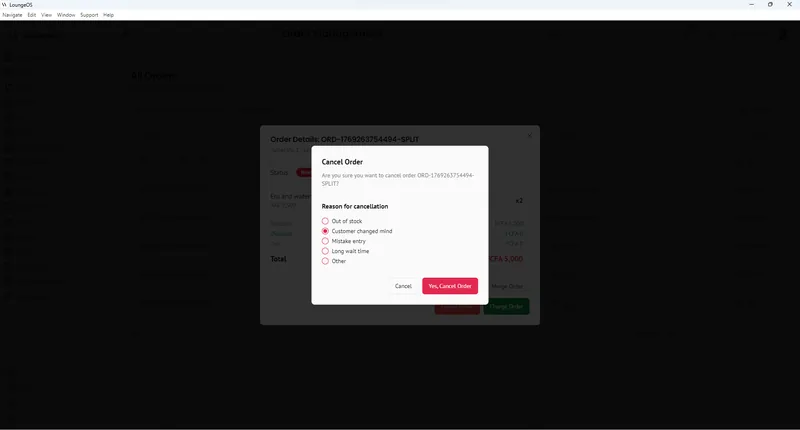
Control: removing items from a sent order requires a manager’s credentials, and every cancellation requires a reason. In LoungeOS both are enforced and logged.
2. Under-ringing
How it works: the item rung up is cheaper than the one served (a local beer instead of an imported one).
What exposes it: stock variance. Imported beer goes down faster than sales say.
Control: count high-value stock weekly. Compare deliveries − sales − recorded losses with the shelf. See bar shrinkage.
3. Not ringing up at all
How it works: the drink is served and paid for in cash, and the order is never entered.
What exposes it: stock variance, and drinks that leave the bar without a ticket.
Control: no ticket, no drink. With a bar display, bartenders prepare only what appears on their screen.
4. Fake walkouts
How it works: “The customer left without paying.” In reality the customer paid cash.
Control: cancellations require a reason and are logged with name and time. Track walkout frequency per waiter.
5. Unauthorised discounts
How it works: a staff member applies a discount, charges full price in cash and keeps the difference, or gives friends a deal.
Control: only pre-configured discount rules can be applied, and discounts can be switched off. Review discounts by staff weekly.
6. Fake comps and “free” drinks
How it works: drinks recorded as complimentary, spilt or broken, but actually sold or given away.
Control: every stock-out for damage, waste or loss is recorded with a name and reason. Limit who can record waste.
7. Sweethearting
How it works: free or cheap food and drinks for friends and family.
What exposes it: unusual discounts, cancellations or low average bills for one waiter’s tables.
Control: personal logins plus staff performance reports.
8. Shared-login abuse
How it works: one login used by several people, so nothing can be attributed.
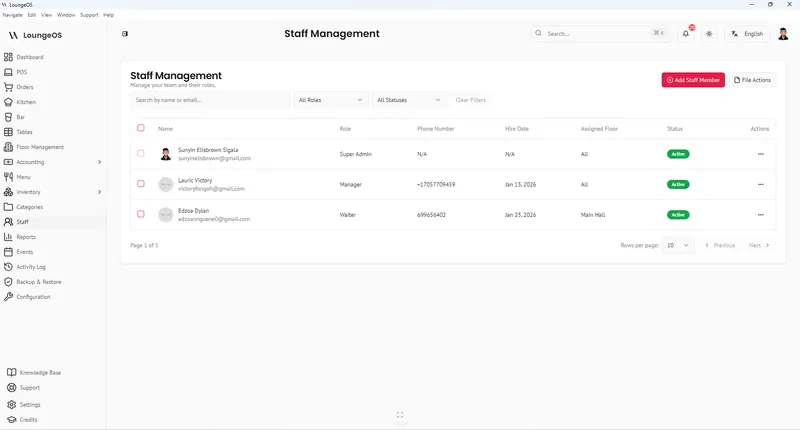
Control: one person, one account. Sessions should time out. In LoungeOS inactive sessions log out after two hours.
9. Cash drawer skimming
How it works: cash is taken from the drawer during a busy shift.
Control: one cashier per drawer per shift, counted at handover. The POS cash total for that cashier must match.
10. Fake mobile money payments
How it works: a fake confirmation SMS from a customer, or a staff member records a cash sale as mobile money and keeps the cash.
Control: confirm payments on the business phone, record the transaction reference, reconcile daily. See accepting mobile money safely.
11. Inventory walking out the back door
How it works: bottles, meat or packaging leave with staff or “suppliers”.
Control: receive deliveries against an order, record stock in immediately, count high-value items often, and limit stockroom access.
12. Refund fraud
How it works: a refund is processed for a sale that never happened, or was already refunded.
Control: refunds need a manager and a reason, and are reviewed weekly.
The four controls that stop most theft
| Control | Schemes it stops |
|---|---|
| Personal logins with automatic timeout | 7, 8, and makes every other scheme traceable |
| Manager approval for voids, item removal, splits and refunds | 1, 4, 12 |
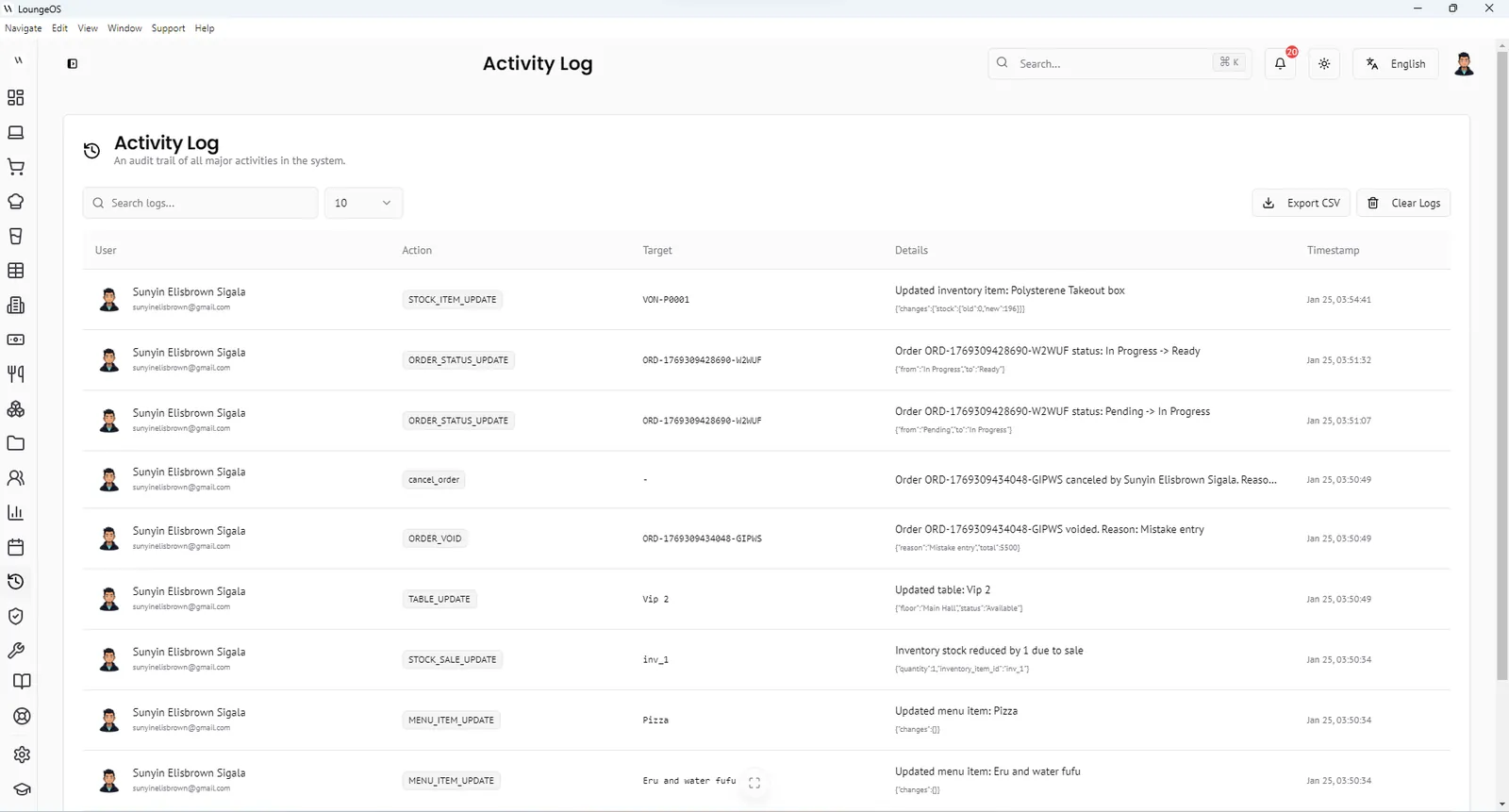
| Mandatory reasons and an activity log | 1, 4, 5, 6 |
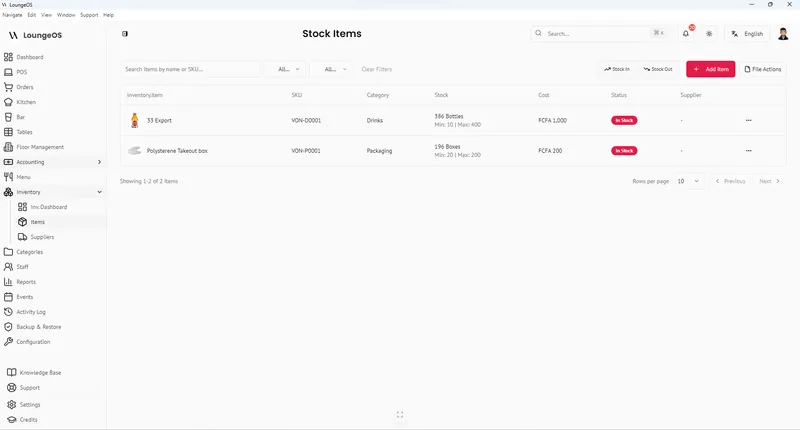
| Stock counts with recorded losses | 2, 3, 6, 11 |
LoungeOS builds these in: personal logins with a two-hour inactivity timeout, manager-only item removal and bill splitting, mandatory cancellation reasons, an activity log, and stock-loss recording with names. See loss prevention features.
The 15-minute weekly theft review
Every Monday, look at last week’s numbers:
- Cancellations by staff member. Is anyone well above the others?
- Discounts by staff member. Are they within your rules?
- Walkouts and “customer left” reasons. Any pattern?
- Stock variance for your 10 most valuable items. Expected vs counted.
- Mobile money and cash reconciliation gaps. Any recurring cashier?
- Activity log after closing time. Any logins or changes at odd hours?
Investigate patterns, not one-off events. One cancellation is normal. Fifteen on Friday nights, all by the same person, all “customer left”, is a conversation.
How to handle suspected theft fairly
- Gather facts first: the activity log, the camera footage for the same times, stock counts.
- Talk privately, describe what the data shows, and listen. Sometimes there’s an innocent explanation, such as a training gap or a broken process.
- Follow local employment law and your written policies. Get advice before dismissal or police involvement.
- Fix the process that allowed it, so it can’t happen again with someone else.
Run your next service on LoungeOS
Install LoungeOS on a Windows computer, connect your tablets and phones over Wi-Fi, and run real service for 30 days. Free, no credit card.
Frequently asked questions
What percentage of restaurant losses come from employee theft?
Figures often attributed to the US National Restaurant Association estimate that employee theft accounts for about 75% of restaurant inventory shrinkage. Other industry sources put theft at around 4% of sales. Your own numbers depend on your controls.
How can a POS system prevent employee theft?
By giving every staff member a personal login, requiring manager approval for voids and item removal, forcing a reason for every cancellation, restricting discounts to pre-set rules, and logging every action so patterns are visible.
What is sweethearting in a restaurant?
Sweethearting is when staff give friends or family free or discounted food and drinks without authorisation. It shows up as unusual discounts, cancellations or low bills for one employee’s tables.
Should I install cameras or a better POS?
Both work best together. Cameras show physical actions. The POS activity log shows system actions. Matching a suspicious cancellation in the log to the camera footage at the same minute is very powerful.